
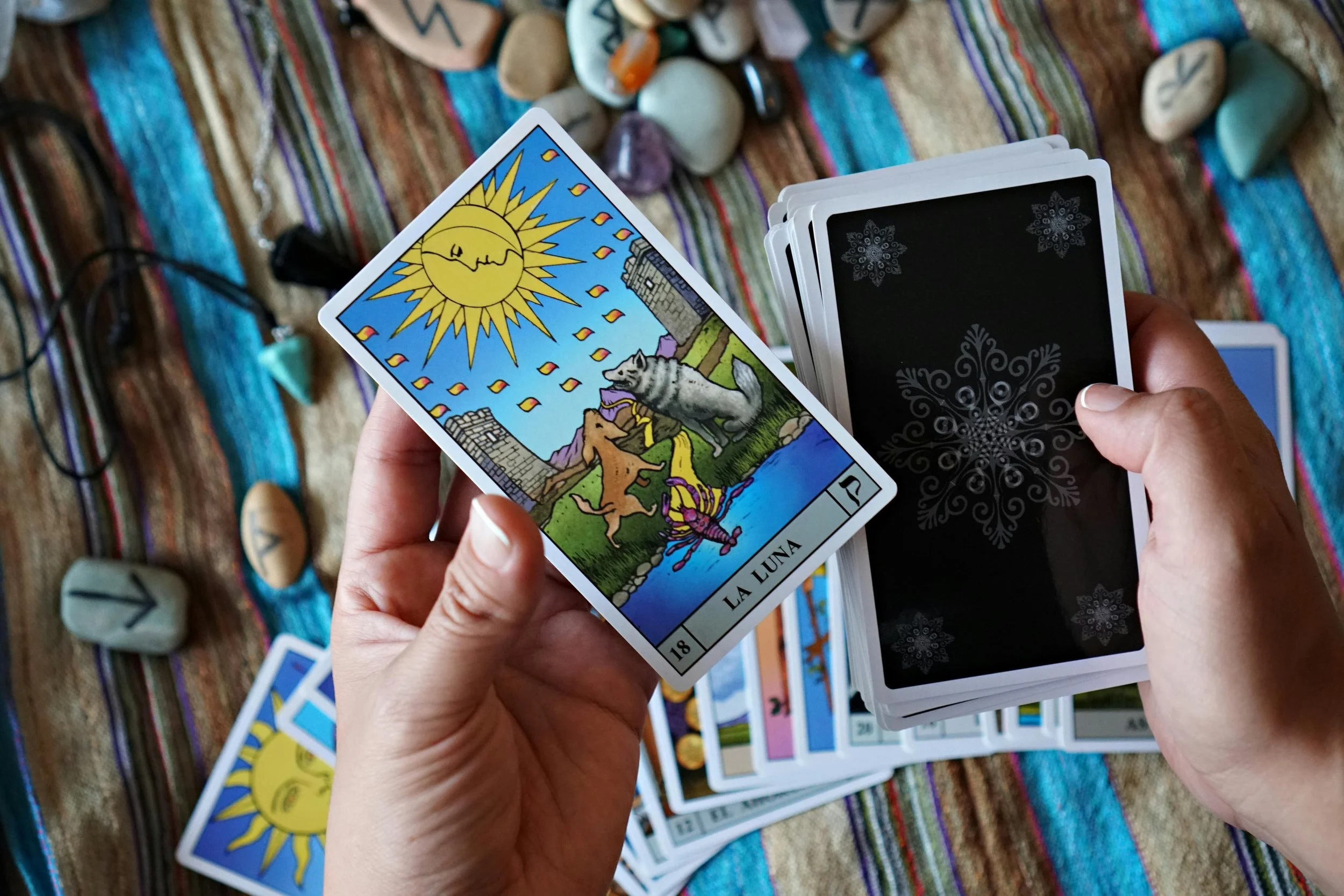
The Powerful Benefits of Tarot in Therapy
Tarot and oracle cards aren’t just for fortune-telling—they can also be a powerful tool in the therapeutic process. Whether you’re seeking therapy for anxiety, therapy for depression, or a new way to process life, integrating these tools can help shift your perspective. Our latest post, featuring insights from Dyad Psychology’s Casey Gallagher, LMHC, explores the potential benefits of using tarot and oracle cards in therapy. We’ll provide an overview of these tools and walk through how they might be used in holistic therapy near you.
About Tarot and Oracle Cards
Tarot cards arose in Renaissance Italy, and were first used for fortune-telling in France in the 1700s. Standard tarot decks have 78 cards with illustrations representing allegorical meanings. Traditional tarot readers will select tarot cards to make predictions; in the clinical setting, tarot cards can help the therapist and client explore the client’s inner world.
Oracle cards, first created in the 1800s, are similar to tarot cards but with no set number of cards or rigid structure. Oracle card decks often contain more positive, varied, and easier-to-interpret imagery than tarot decks, making them accessible tools for self-insight.
Therapists like Casey Gallagher integrate tarot and oracle cards into their practice to aid clients with processes such as identifying and reflecting on emotions. Crucially, therapists don’t use cards to predict the future—the client remains the expert on their own life. Instead, these cards can provide a variety of therapeutic benefits for clients who are interested in working with them.
Tarot and Oracle Cards in Therapy
Why use tarot and oracle cards in therapy? Casey Gallagher was inspired by personal experience: “It was during a particularly challenging season of my life—marked by significant grief and loss—that I turned to tarot and oracle cards to help identify and articulate emotions I initially found difficult to express.” Eventually, working with the cards gave her “concrete tools and alternative perspectives that helped [her] move from uncertainty and feeling stuck toward clarity and empowerment.”
Her own experience with tarot cards inspired her to develop a structured approach when using the cards in therapy. She created guiding questions aligned with the tarot deck, as well as art-based and mindfulness-based activities to accompany the use of tarot cards in therapy.
Benefits of Using Cards in Therapy
People searching for a holistic therapist near them may benefit from using tarot or oracle cards as “projective tools.” Projective tools are prompts in therapy that lack defined meanings. Just as people see shapes in clouds, projective tools help capture inner thoughts and feelings that people project onto them. As Casey Gallagher describes, tarot and oracle cards work “as powerful projective (never predictive) tools within therapy, providing clients with symbolic language and imagery that can surface unconscious thoughts, feelings, and patterns.”
Thus, tarot and oracle cards can help clients acknowledge feelings that they wouldn’t otherwise recognize, or that they might have suppressed. These cards can also help people think through their life narratives, as well as create a focused attention similar to mindfulness practices.
The potential psychological benefits of working with tarot and oracle cards, as Casey has observed in her practice, include:
Self-awareness: Card readings may help people think about their inner world, allowing them to understand themselves better. In Casey’s words, “The process encourages reflection, meaning-making, and narrative development, all of which support emotional processing and growth.”
Validation: The imagery and interpretations in card readings may help clients feel understood and have their emotions recognized. As Casey puts it, “[T]he cards can help normalize and validate clients’ experiences, reducing feelings of isolation and fostering hope.”
Empowerment: Card readings may expand people’s perspectives on situations and help them be proactive in decision-making: “By engaging with the cards, clients can access intuition and inner wisdom, which promotes empowerment and active participation in their healing journey.”
Critical thinking: Tarot readings require people to engage with different pathways and viewpoints. Casey states, “This externalization helps clients explore difficult emotions and situations from new angles, often revealing insights that might be elusive through traditional talk therapy alone.”
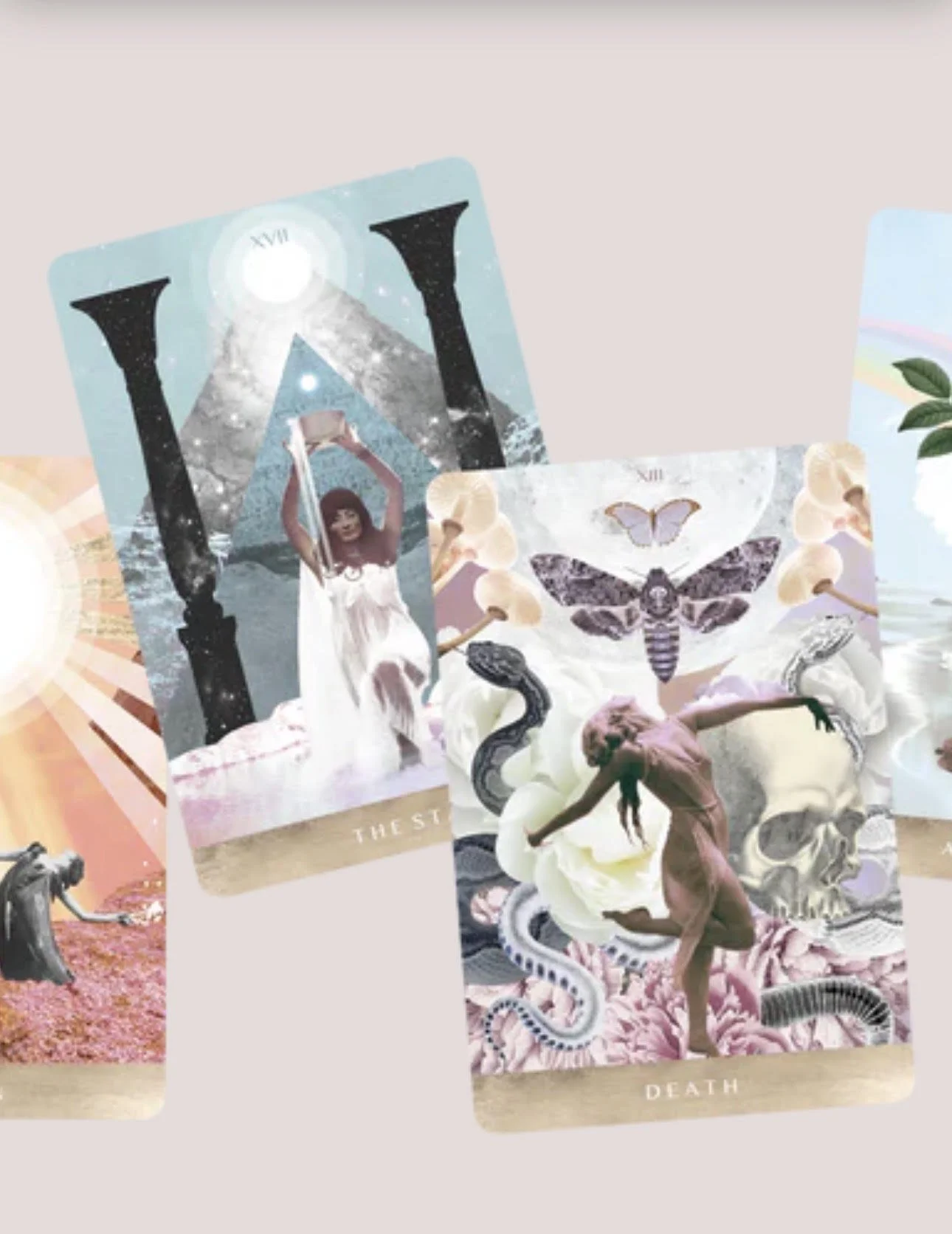
Cards from the moonchild deck
Artist: Danielle Noel
Sessions with Oracle and Tarot
Integrating cards into a therapy session is always optional. A typical session using cards starts with “setting an intention or identifying a focus area, such as exploring emotions, decision-making, or self-discovery.”
Next, Casey will have clients choose some cards from the tarot deck. Then, “Together, we explore the symbolism and themes of the cards in relation to the client’s current experiences, using open-ended, therapeutic questions to deepen insight. The client is encouraged to share their interpretations and feelings, fostering a safe space for exploration.”
Casey may also have a client use techniques like “journaling, art expression, or mindfulness exercises to enhance integration of insights.” Ultimately, the client’s needs drive the session with tarot.
Here are some of Casey’s favorite decks that she uses in therapy:
Moonchild Tarot by Danielle Noel: “I love her image of the death card and the symbolism that it holds around death as a portal for transformation and transmutation. It reminds me that even in the midst of grief, we are always in the process of becoming.”
The Kim Krans Wild Unknown collection: “I am an artist, and her use of symbolism, nature, mysticism, alchemy, colors, the universe, and all other things that ignite and inspire me, make these cards interesting and new every time I hold them.”
Grow by Justina Blakeney and Dr. Ronnie Blakeney. “Each card invites you to become curious about how you experience that theme- whether it’s abundance, boundaries, or sunshine. Then the card gives you lovely prompts to observe, act on, and questions to reflect.”
Conclusion
Tarot and oracle cards, although historically used for divination, may offer powerful psychological benefits in therapy, such as promoting self-insight, validation, empowerment, and decision-making. Dyad Psychology’s Casey Gallagher, LMHC, incorporates card readings into sessions for clients who believe it would help their healing journey.
Frequently Asked Questions
1. Are tarot and oracle cards in therapy the same as a psychic reading?
No. In therapy, the goal is "projective," not "predictive." Therapists use the cards to help you describe your current internal state, not to tell your future. You retain complete control over your story.
2. Can using cards in therapy help with anxiety or depression?
Yes. For those in therapy for anxiety and depression, cards can help clients express feelings that might be difficult to verbalize. The potential psychological benefits of card readings, such as self-awareness and validation, can also assist people looking for therapy for anxiety or depression.
3. How might mental health practitioners incorporate the use of tarot and oracle cards in holistic therapy?
Therapists like Casey Gallagher may have clients identify a goal or focus area before the clients draw cards. They can then have discussions based on how the cards relate to the client’s thoughts and experiences. The specifics of a session depend on a client’s needs and comfort level.